
Sweden’s InfCareHIV benefits patients and physicians – unified data ensures efficiency of care
InfCareHIV is a decision support system used nationally for the treatment of HIV in Sweden. It was established in 2003 to ensure equal and effective care of people living with HIV and enable their long-term follow-up.
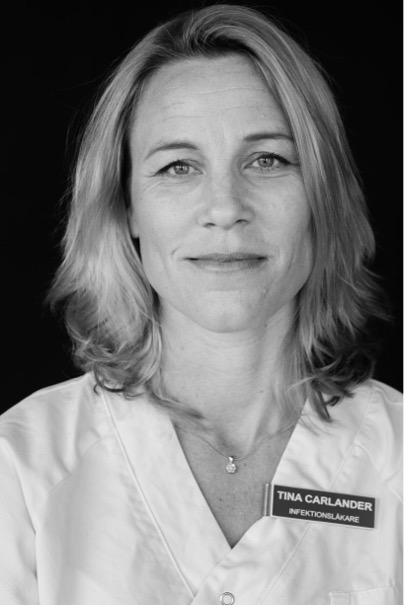
Dr Christina Carlander has been Director of the national InfCareHIV in Sweden since 2021. She also works at Karolinska Institutet, one of the world’s foremost medical universities in Stockholm, and at Karolinska University Hospital where she sees patients with HIV. She has done extensive research involving HIV since 2012. In 2018, she published her dissertation focusing on the risks of having cervical cancer in migrant women living with HIV.
“Nowadays, I spend 40% of my time at the Karolinska University Hospital, 40% on InfCareHIV, and 20% on research. I’ve always used InfCareHIV in my research and my work as a physician when I see my patients.”
InfCareHIV responds to three needs
Clinicians and researchers initially proposed an HIV decision support system. Joakim Söderberg, the founder of Health Solutions – a company that merged with BCB Medical in 2021 – was actively involved in creating the system.
Carlander describes the needs behind the system as the three legs of InfCareHIV.
“There was a need for a clinical tool for daily use when working with patients. There was also a need for a nationwide quality register to provide equal care and save lives. And finally, there was a need for a research base. InfCareHIV fulfils all these requirements.”
Before the creation of the InfCareHIV system, researchers, clinicians, and hospitals providing care for HIV patients recorded data using different measures, tools, and platforms. The lack of unified data made comparing the efficiency of care and treatment pathways difficult.
Benefits for doctors and patients
Today, InfCareHIV is actively used as a clinical decision tool by almost all physicians at every patient visit. The system makes it easier for the doctor to see the patient’s current situation – whether the medicines are working, the level of virus in the blood, when the patient is not transmittable, etc. The quality of the system remains high because it is used constantly and considered useful by and for clinicians.
Carlander herself uses it regularly in her work as an attending physician.
“When I started working at Karolinska University Hospital in 2021, I took over the care of around 500 patients. Getting a grasp of the patient data can be challenging, but thanks to InfCareHIV, I could see all the data with one glance.”
The system is also an excellent pedagogical tool.
“Patients themselves are interested in the graphs that show their condition. For instance, if they are not taking their medication, it shows up in the graphs very quickly.”
Benefits for the healthcare sector and society
InfCareHIV is a valuable research base thanks to its high data quality and almost 100% coverage. It has been extensively used in various healthcare studies.
As a society, Sweden has greatly benefited from the decision support system. It has contributed to the fact that as the first country in the world, in 2015, Sweden reached WHO’s 90-90-90 goal in the care of HIV patients:
- 90% diagnosed
- 90% of them on antiretroviral therapy (ART)
- 90% of them with viral suppression
Today, Sweden has already reached the 95-95-95 goals.
“In many countries, the results in the care of HIV patients are just as good, but they don’t have the statistics at their disposal, whereas we can accurately measure our success.”
Finland is also using the InfCareHIV decision support system, and similar register systems are in use in Denmark, France, Greece, Italy, and Switzerland.
“We have some Nordic collaboration and joint publications with, for instance, Denmark and Finland, and multicentre HIV cohorts, but collaboration is something we could do more.”
Listening to the patients in development
For further development of InfCareHIV, there is fruitful collaboration with patient organisations and a patient representative in the steering committee. Work is underway, for instance, for an update on the integration with 1177, the national healthcare helpline and website that provides information about illnesses, care, and health in Sweden. The questionnaire on the PROMs (patient-reported outcome measures) is already available via 1177, but the decision tool graph still needs to be.
“Currently, only 40% of patients answer these questionnaires, mainly because the health care personnel have little time to spare. Patients have asked for the possibility of getting the graphs to the 1177.se website so they can access them at home”, Carlander says.