BCB Clinical Information Management Systems – The beating heart of clinical intelligence
BCB Clinical Information Management Systems (CIMS) are disease-specific clinical software platforms from BCB Medical. They give healthcare professionals a clear, structured view of each patient by bringing relevant clinical data, patient-reported information, patient records and treatment history together in one platform.
This helps clinicians find and analyse the information they need faster, understand the patient’s situation more easily and make more informed, timely care decisions. As solutions certified under the EU Medical Device Regulation (MDR), our CIMS also support healthcare organisations in improving operational efficiency and delivering better patient care through data-driven insights.
A clear, comprehensive view of patient care
CIMS give healthcare professionals:
Complete patient overview in one data-secure platform
AI-driven decision support for improved care quality
Simpler documentation and therapy planning, with high-quality, structured data
Smoother daily workflows and more efficient patient care
Getting a grasp of the patient data can be challenging, but thanks to InfCareHIV, I could see all the data with one glance.
Christina Carlander Senior Consultant at the Department of Infectious Diseases Karolinska University Hospital
From quality registries to intelligent care decisions
BCB CIMS support a wide range of clinical, operational and quality improvement objectives. The same platform can serve as a quality registry, a treatment decision-support tool, a solution for managing complex patient cohorts and a digital pathway that guides patients through care while professionals follow their progress.
By combining structured patient data, patient-reported outcomes, treatment history and real-world evidence (RWE), CIMS give professionals the information they need to monitor care quality, optimise treatment pathways and support both individual patient decisions and broader healthcare development.
In Finland and Sweden, several BCB solutions also serve as national quality registries, supporting large-scale quality monitoring, benchmarking, research and healthcare development.
Read more about FinSpine, a national quality registry based on BCB Clinical Information Management System for spine surgery patients, and InfCARE HIV, which fulfils the same need for HIV care in Sweden.
There was a need for a clinical tool for daily use when working with patients. There was also a need for a Nationwide Quality Register to provide equal care and save lives. And finally, there was a need for a research base. InfCareHIV fulfils all these requirements.
Christina Carlander Senior Consultant at the Department of Infectious Diseases Karolinska University Hospital
Digital Pathways: personalised care pathways
A digital care pathway guides patients through each stage of care online, delivering the right questionnaires, instructions and messages at the right time while professionals follow their progress. BCB Digital Pathways lets healthcare organisations build personalised pathways that adapt to each patient’s needs and support patients before, during and after care.
Personalised care plans tailored to each patient
Activation and tracking of patient-specific care events and interventions
Easy to create, manage and update, with the content and tools that both professionals and clients need
Automated service processes and effective monitoring
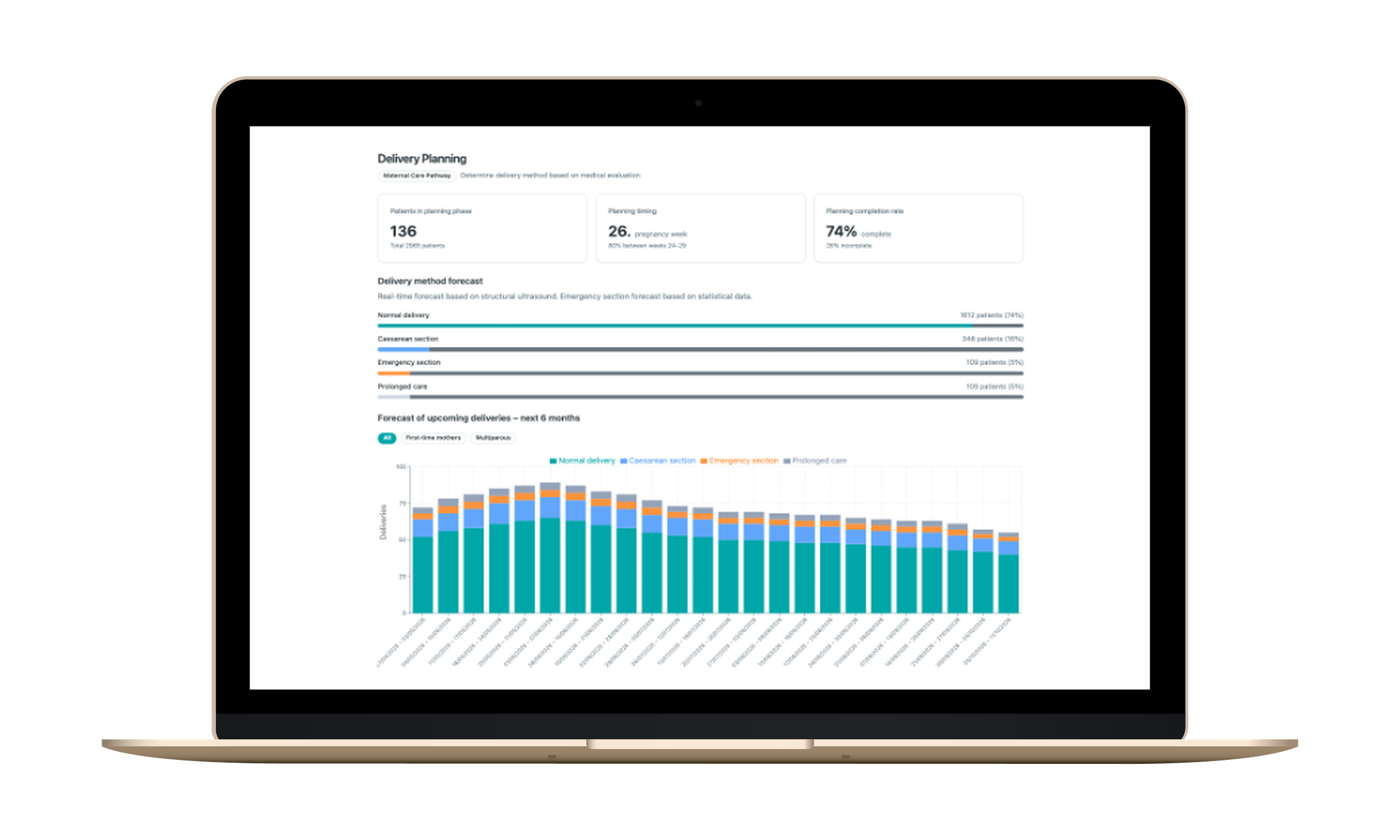
Organisation-level monitoring of care processes supports data-driven decision-making, and AI-driven analytics help plan and forecast healthcare resources using current and historical pathway data.
What can a pathway include?
BCB Digital Pathways can be configured to fit a wide range of client and patient needs, including:
Non-urgent communication between clients and healthcare professionals
General patient and client guidance, including service information and relevant links
Treatment and self-care instructions
Digital forms and questionnaires, including MyHealth Generic Questionnaires
Tasks, activities, scoring methods and engagement tools that support individual care goals and patient engagement
Main use cases
Quality registries for continuous monitoring and improvement of care quality
Treatment decision support through patient-specific clinical insight
Management of complex patient cohorts and long-term follow-up
National and regional quality registries for benchmarking and outcome measurement
Real-world data collection for research, analytics and healthcare development
Population-level monitoring and value-based healthcare initiatives
Benefits for clinicians
CIMS give healthcare professionals immediate access to clinical data, patient-reported outcomes, treatment history and follow-up information in one view. This saves time otherwise spent searching across systems and supports timely, informed treatment decisions. CIMS also strengthen documentation, therapy planning and continuity throughout the patient’s care pathway.
Complete clinical overview in a single view, with less time spent navigating multiple systems
Real-time visibility into treatment outcomes and patient progress
Structured, standardised documentation that improves data quality
Better collaboration between healthcare professionals across the care pathway
Better follow-up of patient-reported outcomes and treatment effectiveness
Benefits for healthcare organisations
By standardising data collection and bringing information from different sources into one structured environment, CIMS and BCB Digital Pathways give healthcare organisations clearer visibility into care quality, treatment effectiveness, resource use and patient outcomes. Digital Pathways extend this across the whole care process, processing questionnaires, client information and care pathways automatically and showing how pathways perform. The result is stronger quality improvement, reporting, research and analytics, and support for value-based healthcare (VBHC), which measures care by the outcomes achieved for patients relative to cost, without unnecessary administrative complexity.
One platform for quality registries, care pathway management, treatment decision support and complex cohort management
Less administrative work through automated data collection and integrations, including automated processing of questionnaires, client information and care pathways
Higher data quality and consistency across the organisation
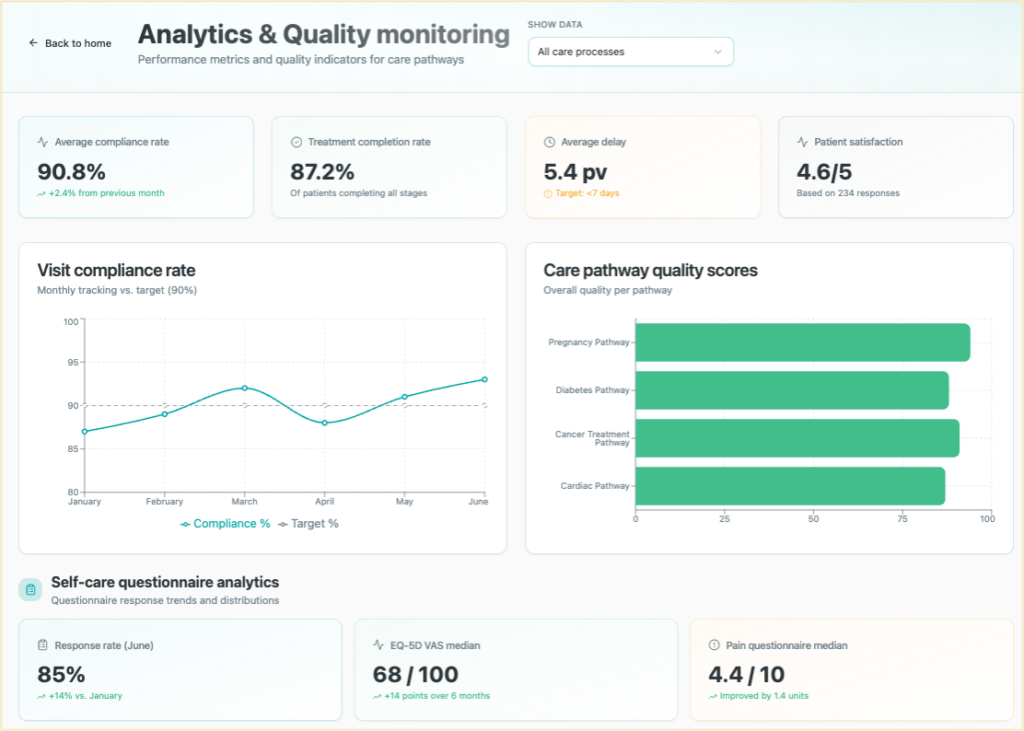
Stronger reporting and benchmarking, with monitoring and impact assessment tools for healthcare professionals
Pathway visibility and forecasting with organisation-level insight into pathway performance and forecasts of service demand, seasonal variations and future resource needs
Continuous quality improvement and support for value-based healthcare
Structured real-world data (RWD) for analytics and research
Seamless integration with existing electronic health record (EHR) systems, and open APIs that display pathways in regional or organisation-specific client portals
Scalable across multiple specialties and disease areas
Better patient outcomes and patient experience
Turning care data into measurable value
CIMS help organisations turn everyday care data into measurable improvement. With reliable clinical data and patient-reported outcomes in one place, teams can compare performance, monitor outcomes, identify best practices and make evidence-based decisions at clinical and operational level.
Explore our case studies to discover how BCB CIMS can create value in different ways.
Medical specialties and disease areas
Our CIMS cover almost 100 disease-specific registries in the following therapy areas: Orthopaedics, Gastro & Metabolic, Maternity & Neonatal, Cardiology, Ophthalmology, Neurology, Organ and Tissue Transplantation, Cancer, Paediatrics, Psychiatry, Skin & Allergy & Respiratory, Rare Diseases and others. Read more about different medical specialties here.
BCB CIMS supports six main use cases on one platform:
Quality registries for continuous monitoring and improvement of care quality
Treatment decision support through patient-specific clinical insight
Management of complex patient cohorts and long-term follow-up
National and regional quality registries for benchmarking and outcome measurement
Real-world data collection for research, analytics and healthcare development
Population-level monitoring and value-based healthcare initiatives
What can BCB CIMS be used for?
BCB CIMS covers almost 100 disease-specific registries across orthopaedics, gastro and metabolic, maternity and neonatal, cardiology, ophthalmology, neurology, organ and tissue transplantation, cancer, paediatrics, psychiatry, skin, allergy and respiratory, rare diseases and other therapy areas. Examples include HepCARE, a hepatitis decision support system in the UK, and the KIDS Fracture Tool in Finland.
Which medical specialties and disease areas does BCB cover?
It shows clinical data, patient-reported outcomes, treatment history and follow-up in one view, so clinicians spend less time searching across systems. It also standardises documentation and therapy planning and gives real-time visibility into treatment outcomes. As Christina Carlander of Karolinska University Hospital says of InfCareHIV: “I could see all the data with one glance.”
How does a CIMS help clinicians?
By standardising data collection and bringing sources into one structured environment, it gives organisations clearer visibility into care quality, treatment effectiveness, resource use and patient outcomes. Teams can compare performance, identify best practices and report with higher data quality and less administrative work. It also gives access to structured real-world data for analytics and research.
How does a CIMS help healthcare organisations improve quality?
Yes. BCB CIMS provides AI-driven insights that support clinical decision-making, and AI-driven analytics that support planning and forecasting of healthcare resources in digital care pathways.
Does BCB CIMS include AI decision support?
A digital care pathway guides a patient through each stage of care online, delivering the right questionnaires, instructions and messages at the right time while professionals follow progress. BCB Digital Pathways lets organisations build personalised pathways that can include:
Non-urgent communication between patients and professionals
General guidance, service information and links
Treatment and self-care instructions
Digital forms and questionnaires, including MyHealth Generic Questionnaires
Tasks, scoring methods and engagement tools
Open API capabilities let pathways appear inside regional or organisation-specific client portals, and organisation-level monitoring and forecasting show pathway performance and expected demand.
What are BCB Digital Pathways?
Ask about regulatory status, EHR integration, specialty coverage, security certification, patient-reported data and analytics. BCB’s answers:
Question to ask
BCB answer
Is it a certified medical device?
Disease-specific CIMS are certified under EU MDR as Class IIa
Does it integrate with our EHR?
Yes, with HL7 v2 and HL7 FHIR; more than 75 integrations delivered
Does it cover our specialty?
Almost 100 disease-specific registries across 12 listed therapy areas and others
Is information security independently certified?
ISO/IEC 27001:2022 and UK DSPT
Can it collect patient-reported outcomes?
Yes, through BCB MyHealth, synchronised with CIMS
Can we analyse the data?
Yes, through BCB Intelligence and BCB AI Dataroom
Does it scale?
Scalable across multiple specialties and disease areas
What should I ask a vendor before buying a clinical information management system?
Get started
See your data come to life
A 30-minute walkthrough of registries, analytics and quality monitoring with your own specialty in mind.