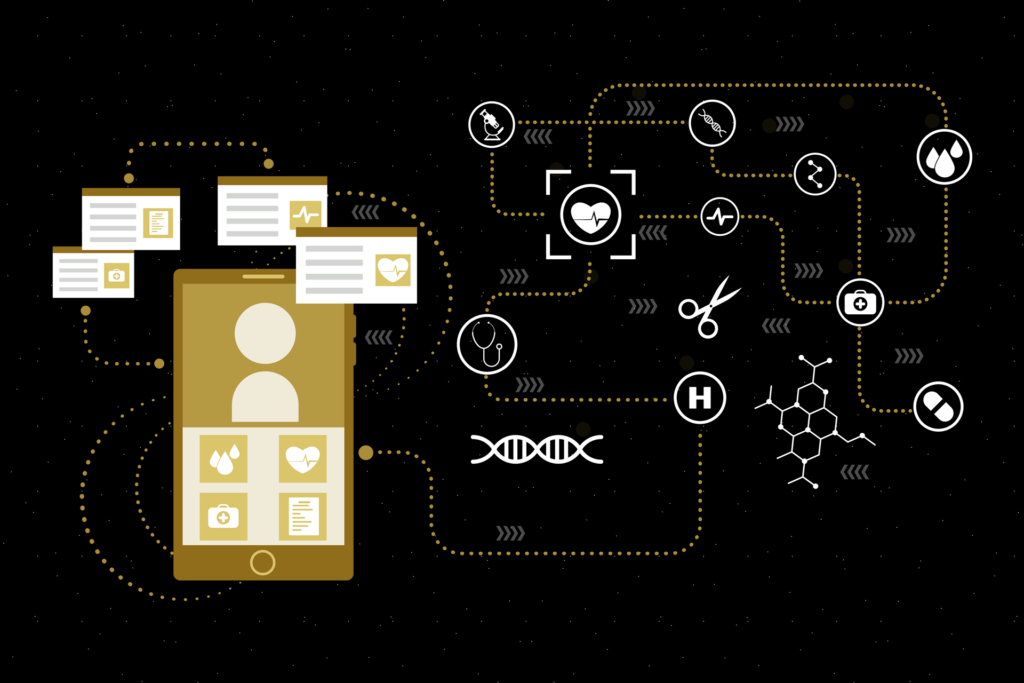
Healthcare interoperability forms the bedrock of modern clinical workflows by enabling the integration of disparate data sources into cohesive, actionable information systems. This foundational capability allows healthcare providers to access comprehensive patient information across multiple care settings and systems, creating a unified view of patient journeys and treatment processes that directly improves care delivery.
For healthcare providers, interoperability addresses a critical challenge: fragmented clinical data that impedes efficient patient care. Without effective interoperability, valuable patient information remains trapped in isolated systems—electronic health records, laboratory information systems, imaging databases, and patient monitoring devices are stored in separate silos, making coordinated care delivery nearly impossible and potentially compromising patient safety.
Interoperability operates at several levels:
- Foundational: Basic exchange of data without requiring interpretation
- Structural: Defining format, syntax, and organization of data exchange
- Semantic: Ensuring consistent interpretation of exchanged data
- Organisational: Enabling seamless workflows across systems and entities
Why is healthcare interoperability important for efficient patient care?
Healthcare interoperability is essential for efficient patient care because it dramatically enhances clinical decision-making, reduces treatment delays, and enables more coordinated care delivery. When systems can communicate effectively, healthcare providers spend less time on manual data retrieval and more time focusing on direct patient care and treatment optimisation.
Key benefits include:
First, interoperability eliminates redundant testing and reduces medical errors by providing clinicians with immediate access to complete patient histories, including previous treatments, allergies, and test results. This comprehensive view enables more informed treatment decisions whilst reducing healthcare costs and patient inconvenience.
Additionally, it enables seamless care coordination across different departments and healthcare facilities, ensuring that all providers involved in a patient’s care have access to the same up-to-date information. This coordination is particularly crucial for patients with chronic conditions or complex care needs who require multi-disciplinary treatment approaches.
Furthermore, interoperability accelerates treatment processes by streamlining clinical workflows, reducing administrative burden, and enabling faster response times to critical patient needs. This efficiency directly translates to improved patient outcomes and higher satisfaction rates. The research applications remain valuable as well, as this comprehensive data collection supports evidence-based medicine and continuous quality improvement initiatives.
How do healthcare systems achieve interoperability?
Healthcare systems achieve interoperability through a combination of technical standards, infrastructure investments, and organisational commitment. The foundation lies in adopting standardised protocols like Health Level Seven (HL7) and Fast Healthcare Interoperability Resources (FHIR) that define how health information is packaged and communicated between systems.
Application Programming Interfaces (APIs) serve as the bridges between different systems, enabling secure, controlled data exchange. Modern healthcare organisations employ API gateways to manage these connections and ensure proper authentication and authorisation.
Effective data governance frameworks are equally crucial, establishing clear policies for data quality, privacy, security, and access rights. This governance layer ensures that technical interoperability translates into meaningful, ethical data sharing.
Clinical Information Management Systems (CIMS) play a vital role by providing purpose-built platforms that aggregate, normalise, and analyse data from disparate sources, creating centralised repositories that overcome the limitations of fragmented healthcare IT environments.
What are the common barriers to healthcare interoperability?
Despite its importance, healthcare interoperability faces several significant challenges. The persistence of legacy systems with outdated architectures and limited connectivity options remains one of the most common barriers, particularly in established healthcare environments with decades of IT investment.
Data standardisation difficulties represent another major obstacle. Inconsistent terminologies, coding systems, and data models across different healthcare organisations make it challenging to integrate information meaningfully, even when technical connections exist.
Regulatory complexities around data privacy (such as GDPR and similar frameworks) sometimes create uncertainty about what information can be shared and under what circumstances, leading to excessive caution in data exchange.
Additionally, commercial and competitive concerns can discourage information sharing between organisations, with some viewing their clinical data as a proprietary asset rather than a resource for collective advancement.
Taking the next step: How BCB Medical enhances interoperability
We at BCB Medical address interoperability challenges through our comprehensive Clinical Information Management Systems, which provide a unified platform for collecting, processing, and analysing clinical data. Our solutions create seamless connections between electronic health records, clinical databases, and treatment platforms, eliminating the data silos that typically hamper efficient patient care delivery.
Our systems are designed specifically to manage specialised medical data across more than 100 disease groups, with automated data collection capabilities that minimise manual input requirements. This approach ensures high data quality whilst reducing the administrative burden on clinical teams, allowing them to focus more on patient care.
As the Nordic market leader in healthcare technology, we have developed sophisticated integration capabilities that have already processed over 300 million integration messages for more than 420 clinics. Our ISO 13485 and ISO/IEC 27001 certifications demonstrate our commitment to quality and data security.
To learn more about how our interoperability solutions can enhance your clinical workflows and improve patient care outcomes, contact us today to schedule a demonstration. Our team of experts can show you how our systems can streamline your care delivery processes, improve treatment efficiency, and help you provide more effective patient care that ultimately leads to better treatment outcomes and higher patient satisfaction.